Supporting Trees With Structural Weaknesses
Tree Cabling in Neosho for stabilizing split trunks and heavy canopies before storm damage occurs
Mature trees develop structural problems as they age, including co-dominant stems with weak unions, heavy limbs that exceed the strength of their attachment points, and splitting trunks that threaten to fail during high winds. Tree cabling provides supplemental support by installing flexible steel cables between major limbs or stems, redistributing weight and reducing movement that worsens cracks. Bussey's Tree Service evaluates each tree to determine whether cabling can preserve valuable specimens while improving safety, or whether structural damage has progressed beyond what support systems can address.
The service works best for trees with sentimental value, significant canopy coverage, or high replacement costs where removal would drastically alter property aesthetics and shade. Cabling does not repair existing damage but prevents further deterioration by limiting the range of motion that stresses weak areas during severe weather common to the Neosho region.
Schedule an inspection to evaluate whether cabling can extend the safe lifespan of structurally compromised trees on your property.
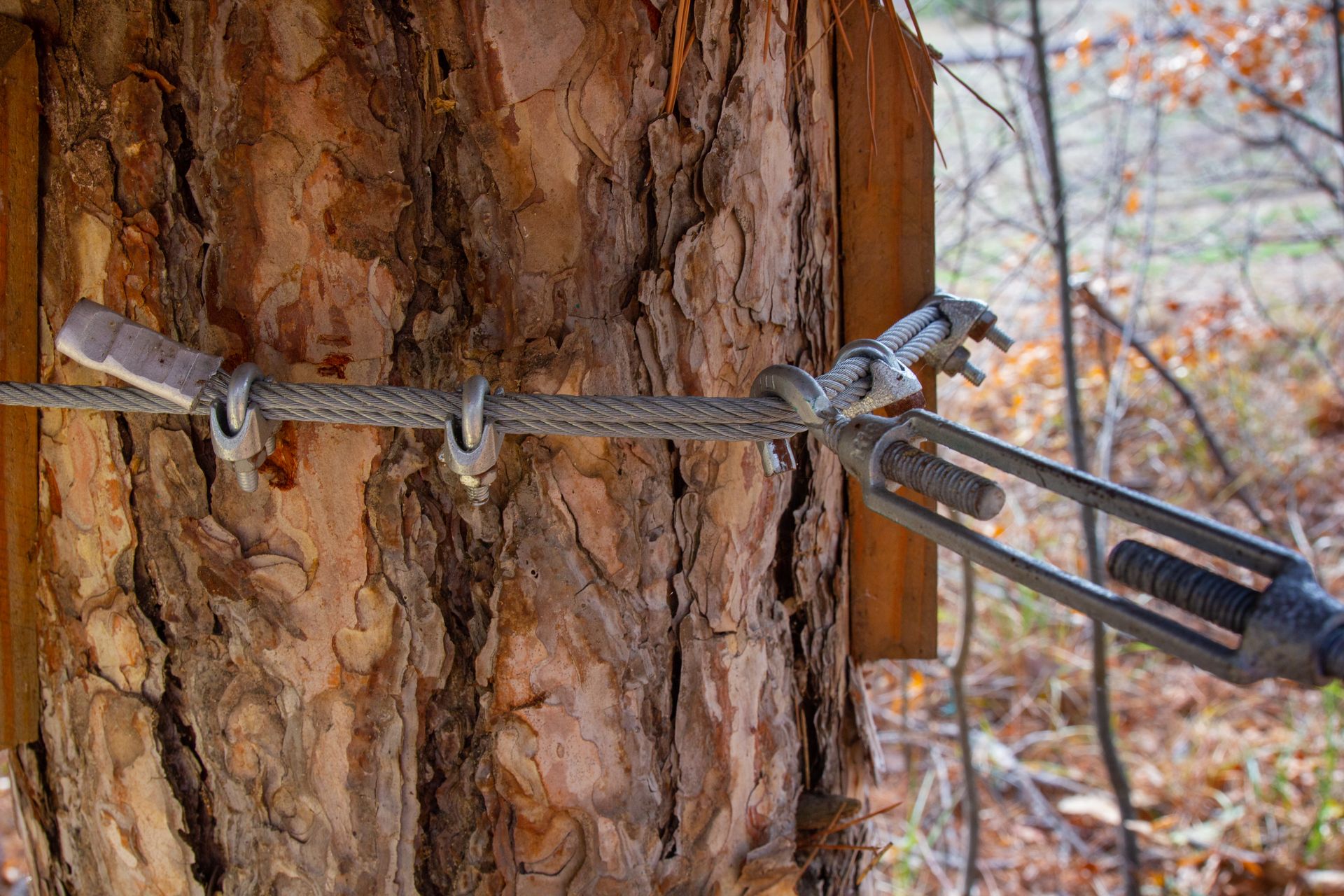
Installation involves securing cables high in the canopy, typically two-thirds of the distance between the weak union and the branch tips, using hardware specifically designed for tree applications. Experienced crews drill through limbs to install eye bolts or threaded rods, then attach cables with enough slack to allow natural movement while preventing excessive sway that widens splits. The system flexes during wind events rather than rigidly restraining growth, which would create new stress points.
After installation, you observe reduced movement in previously unstable areas during storms, with limbs remaining attached rather than tearing away from the trunk. The tree continues growing around the hardware, and periodic inspections verify that cables maintain appropriate tension as the canopy expands. Properties benefit from retained shade and aesthetics without the immediate expense and landscape disruption of removing large, otherwise healthy trees.
Ongoing monitoring remains necessary because cabling manages but does not eliminate structural defects, and conditions may worsen over time despite support systems. Arborists reassess cabled trees annually to detect new cracks, hardware loosening, or decay progression that changes risk levels, adjusting recommendations as tree health and stability evolve.
Questions Before Starting Your Project
Homeowners considering tree cabling benefit from understanding what the system accomplishes, how long it remains effective, and when removal becomes the safer option.
What types of structural problems does cabling address?
Cabling supports trees with split trunks, co-dominant stems with included bark, heavy horizontal limbs over targets like houses or driveways, and canopies weakened by storm damage or decay. It does not repair advanced rot or root failure.
How long does tree cabling last once installed?
Properly installed systems function for decades with periodic inspections to verify hardware integrity and adjust tension as trees grow. Cables require replacement if corrosion develops or if tree growth patterns shift stress to new areas.
When is removal safer than installing cable support?
Trees with extensive decay, root damage, or multiple failure points throughout the canopy exceed what cabling can stabilize. Arborists recommend removal when the likelihood of failure remains high despite support, or when ongoing monitoring costs approach removal and replacement expenses.
Does cabling damage trees or restrict growth?
Modern flexible cable systems allow controlled movement and expansion, with installation wounds small enough for trees to compartmentalize naturally. Properly placed hardware avoids critical vascular tissue and integrates into the canopy structure without girdling or constricting growth.
Can cabling be combined with other tree services?
Pruning often accompanies cabling to reduce canopy weight and remove deadwood that contributes to imbalance, while health treatments address underlying conditions like pest infestation or nutrient deficiencies that weaken structure over time.
Bussey's Tree Service provides experienced installation and ongoing monitoring for trees where structural support preserves value and safety. Arrange a professional evaluation to determine whether cabling suits your specific tree conditions and property protection goals.